
Hardscaping & Patios
A paver patio in Connecticut runs $18–$40 per square foot installed — and the spread between a patio that lasts 30 years and one that heaves in 3 is almost entirely underground.
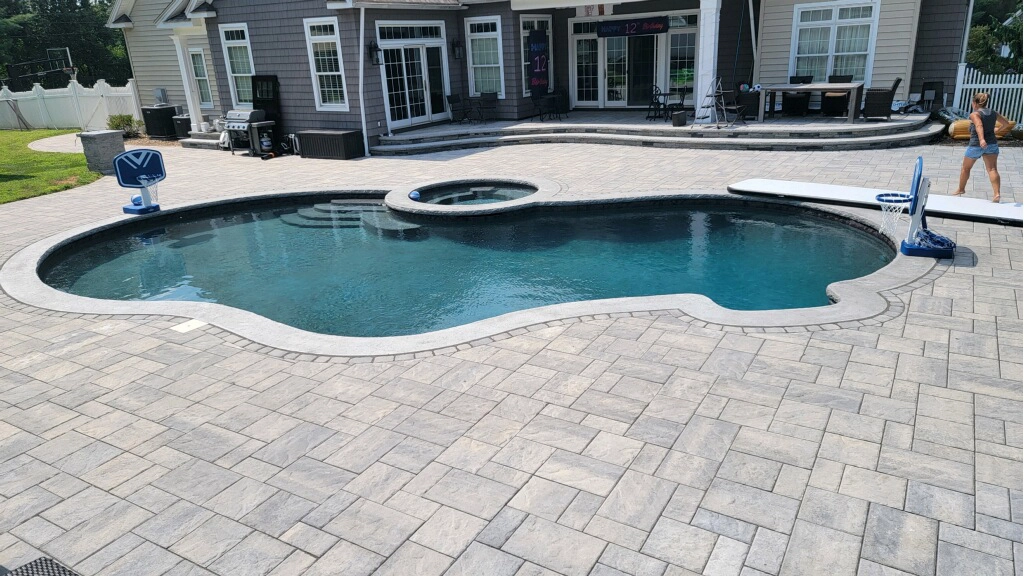
What Drives Patio Cost in Connecticut
Two patios can look identical the day they’re finished and be completely different projects. The visible layer — the pavers — is usually only a third of the cost. The rest is excavation, base material, compaction, and edge restraint: the parts you never see and the parts that decide whether the patio survives Connecticut winters.
Freeze-thaw is the whole ballgame here. Ground moisture freezes, expands, and lifts whatever sits on it. A patio on 4 inches of base heaves and separates within a few seasons. A patio on 8–12 inches of properly compacted processed gravel, with geotextile fabric under it on soft soils, rides through winters flat.
Excavation & Base
Digging 10–14″ down, fabric, gravel in compacted lifts — roughly 40–50% of project cost.
Paver Choice
Concrete pavers $4–$10/sq ft material; natural stone like bluestone $10–$25+.
Site Access
Backyards a machine can’t reach mean hand-carried material — and real labor premiums.
Drainage
Pitch away from the house, and on wet lots, drains or a gravel curtain — cheap now, expensive later.
Pavers vs. Concrete vs. Bluestone
Poured concrete is the budget entry ($10–$18/sq ft) but it’s also the material most punished by our climate — slabs crack at the frost line’s whim, and repairs never match. Concrete pavers hit the sweet spot: individually small units flex with the ground, damaged ones swap out invisibly, and modern lines look far better than the pink cobbles of the 1990s. Natural bluestone is the premium New England look — nothing else reads quite like it — at a price and with periodic resetting needs to match.
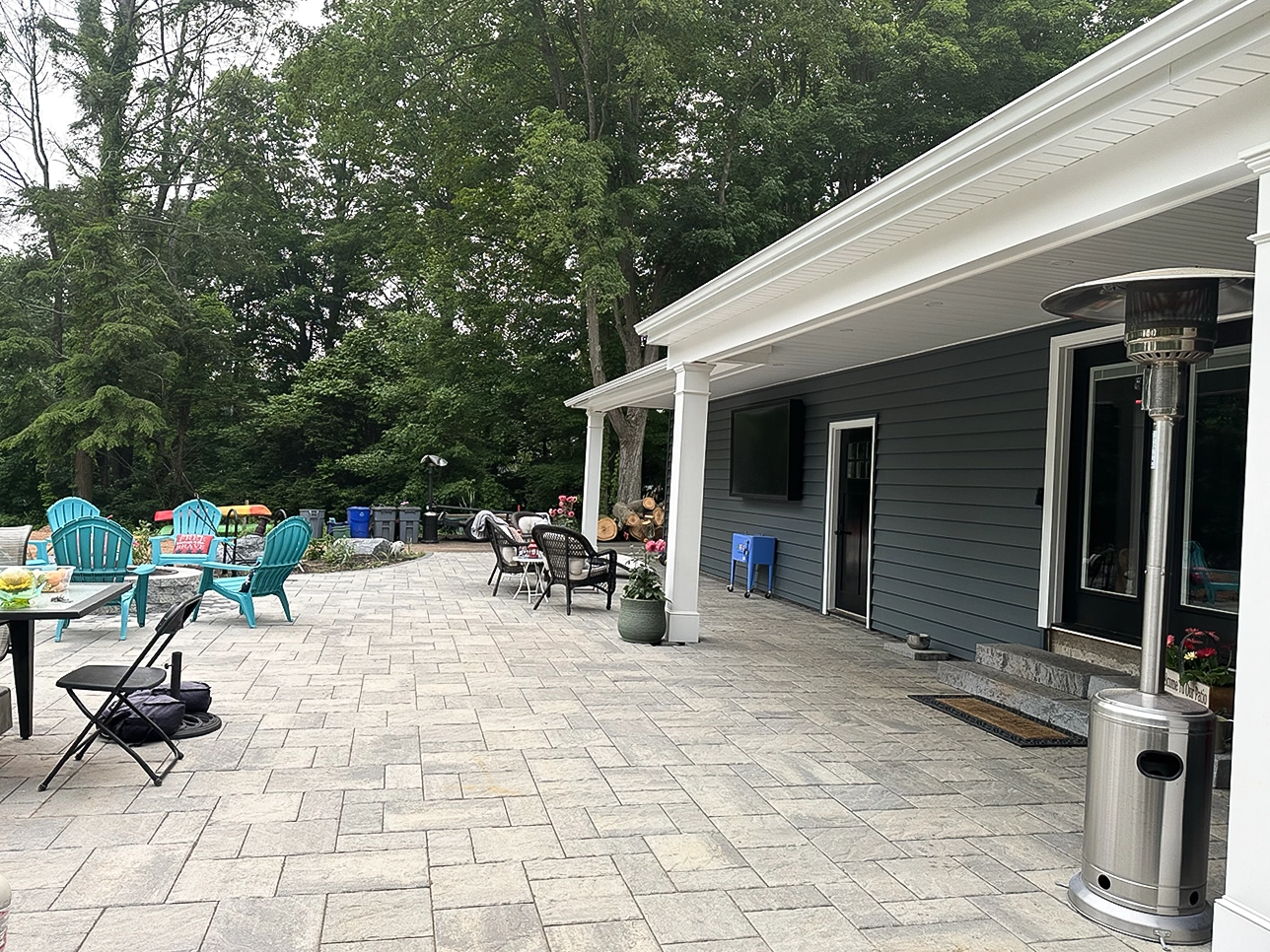
One question filters most patio contractors: “How deep is your base, and how do you compact it?” If the answer isn’t a specific number in inches and compacted lifts, keep interviewing. Nobody warranties frost heave on a shallow base.
Beyond the Slab: What Adds Value
The projects homeowners love most treat the patio as a room, not a rectangle: a seat wall doubling as overflow seating, integrated steps to the yard, lighting in the wall caps, a fire pit zone sized so chairs actually fit around it. These add cost — seat walls run roughly $150–$300 per linear foot — but they’re also what makes the space get used in October instead of abandoned after Labor Day.
Timing note: hardscape season in Connecticut books heaviest May through September, but fall installs are underrated — the ground works fine until it freezes, and you’re first in line to enjoy it in spring.
Do paver patios need a permit in Connecticut?
Ground-level patios usually don’t, but towns differ – and anything with walls above a certain height or significant grading can trigger zoning review. We handle the check for every project.
What maintenance do pavers need?
Re-sanding joints with polymeric sand every several years and an optional sealing. Weeds in joints mean the sand needs refreshing – not that the patio is failing.
Can you build over an existing concrete slab?
Sometimes, if the slab is sound and heights work – but a cracked, heaving slab underneath will telegraph its problems upward. Usually better to remove and base properly.
How long does installation take?
A typical 400 sq ft patio runs 4-7 working days: excavation and base early in the week, laying and cutting mid-week, joint sand and cleanup at the end.